Our team
The Early Nursing Staff
Faces of our history
When St Andrew’s Toowoomba Hospital opened in July 1966, it was a modest facility with two wings, 42 beds and a small nursing team. While the buildings were new, almost everything else still had to be created — from routines and procedures to the culture that would shape the Hospital for decades to come.
What made St Andrew’s special from the very beginning was not its size, but the people who worked there. Under the leadership of Matron Myra Blanch, the Hospital’s first nurses established the standards, traditions and spirit of care that would become the foundation of St Andrew’s.
Building more than a hospital
Many of the nurses arrived before the Hospital officially opened, helping to unpack equipment, prepare wards, organise supplies and develop procedures. It was a time that demanded hard work, resourcefulness and determination.
Sister Jean Sizer later recalled the challenges of those early days:
“Until all requisitions were supplied we had to improvise. After a stint in Papua New Guinea, I was proficient in using cardboard boxes for many and varied purposes until Matron Blanch couldn’t stand it any longer.”
Resources were limited, and staff often had to rely on creativity and practical problem-solving. In many respects, they were building the Hospital from the ground up.
As St Andrew’s grew, that willingness to do whatever was needed remained a defining characteristic. Accommodation pressures sometimes meant converting the flower room into a patient room, placing an extra bed in three-bed wards, or using cane screens to create additional space in corridors. Former nurse Carole Miller remembered how staff adapted to meet demand, finding solutions wherever they could because they believed in the Hospital and wanted it to succeed.
Matron Myra Blanch’s enduring influence
At the centre of those formative years was Matron Myra Blanch, whose leadership helped shape the culture of the young Hospital. Staff remembered her as professional, fair and deeply committed to patient care — a leader who maintained high standards while earning the respect and affection of those around her. As Patricia Wright later reflected, “I loved Matron Myra Blanch. She was always a lady.”
Nursing, friendship and community
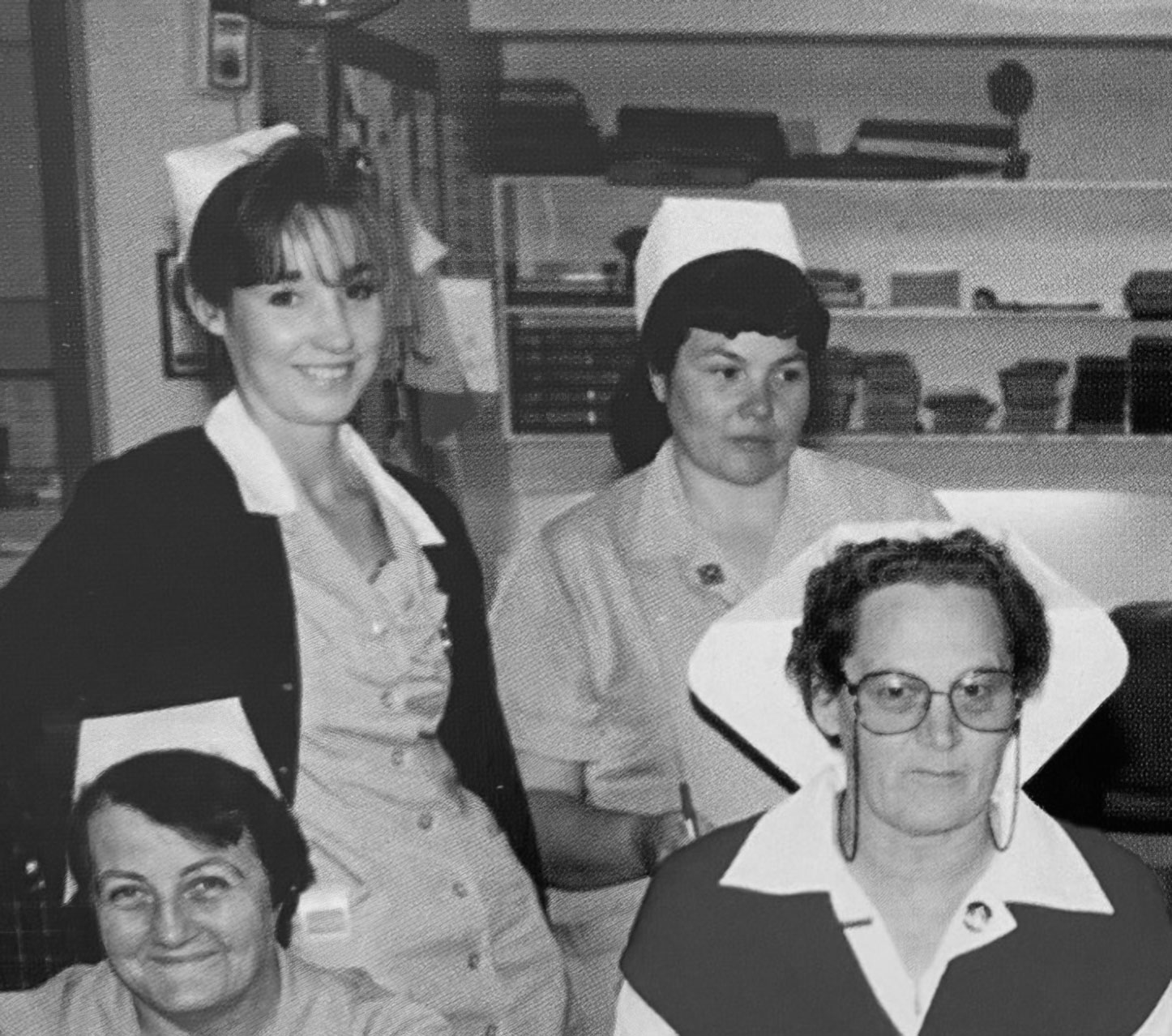
Nursing in the 1960s looked very different from today. Sisters wore traditional white uniforms with distinctive veils, first made from stiff organdie and later from paper. Joy Kelly would later become known as the last nurse in Australia to wear the traditional veil, while Jean Sizer joked that walking quickly down a corridor while wearing one made her feel like: “A flying nun.”
Professional hierarchy was clearly reflected in uniforms and insignia, with registered nurses, certified nurses and aides identified by different markings. Nurses would stand with their hands behind their backs when a doctor was there. Expectations were high, standards were strict and mistakes were corrected promptly. Even so, nurses took great pride in both their profession and their presentation.
Just as memorable as the work itself was the strong sense of community among staff. Former nurses like Carole Miller regularly described St Andrew’s as feeling like a family, with lasting friendships, camaraderie and loyalty. She remembered an environment where everyone knew one another and willingly helped wherever needed.
When extra help was required, staff stepped forward without hesitation. Mary Bennett later recalled nurses returning on their days off with husbands and children to help clean wards, polish floors, make beds and prepare rooms. Overtime was rarely a consideration as the shared goal was simply to help the Hospital thrive.
Small things created a caring culture
Many former nurses also fondly remembered the people who supported them behind the scenes. At Christmas, staff decorated wards and the foyer, Dell Ross painted festive murals, and carols echoed through the Hospital. When wet weather interrupted outdoor celebrations, everyone simply moved indoors and carried on. These everyday acts of care helped create a warm and welcoming atmosphere.
A legacy that endures
The contribution of St Andrew’s early nursing staff extended far beyond clinical care. They helped establish values that remained central to the Hospital long after many had retired: professionalism, compassion, respect for patients, teamwork, adaptability, personal service and Christian care.
Future generations inherited a culture largely created by the women who worked those first shifts. Their legacy continues to shape St Andrew’s Hospital today and remains one of the most important chapters in its history.
Pictured: (L-R) Carole Miller, Jo Kearley, Mary Mason and Sr Eva Rosenberg, 1988