Our team
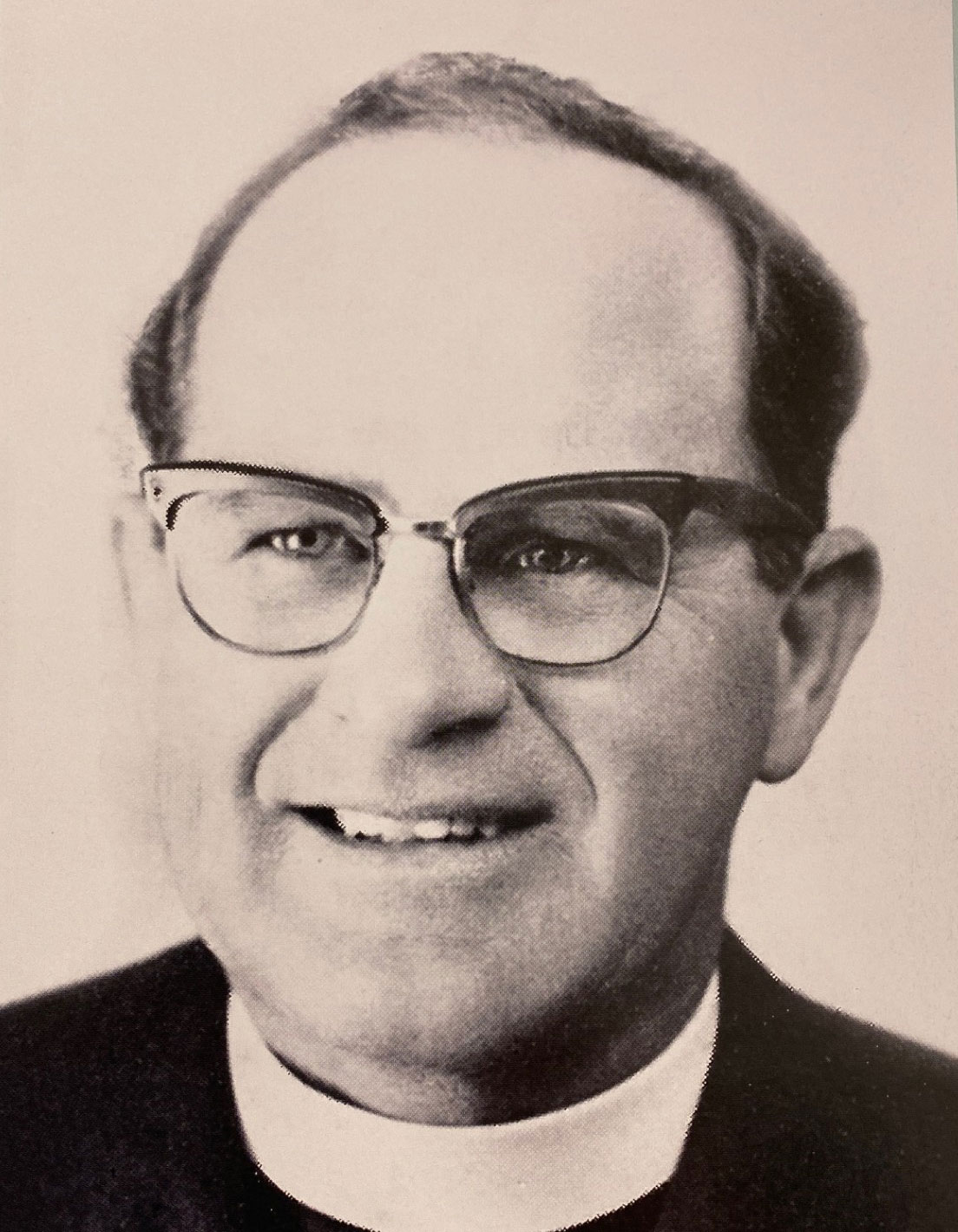
Reverend James McConaghy
Faces of our history
No single person can be credited with turning the dream of St Andrew’s Toowoomba Hospital into reality, but an undeniable driving force of the project was Reverend James McConaghy.
From casual question to serious mission
For years, people had talked about establishing a Presbyterian hospital in Toowoomba. The idea regularly surfaced at church meetings, only to disappear again without action. One of its strongest advocates, Reverend Ian White, repeatedly asked when St Andrew’s Hospital in Brisbane would build a branch hospital in Toowoomba.
Finally, at a Presbytery meeting in July 1961, McConaghy had heard enough.
“If Ian White wants a hospital in Toowoomba, why doesn’t he get off his back side and do something?”
The comment drew laughter, but it also changed the course of history. By the end of the meeting, McConaghy had been appointed to lead a committee investigating whether a hospital was needed. Ironically, he hoped the survey might prove it wasn’t.
Instead, the results revealed strong community support. Doctors reported difficulty finding beds for private patients, and local residents saw a growing need for additional healthcare services. What had been an idea was now becoming a genuine possibility.
The challenge was that possibility alone would not build a hospital.
The committee had no land, no funding and little experience in hospital planning. Members paid expenses from their own pockets as they gathered information and worked to build support. Meanwhile, opposition emerged from both the wider community and within the church itself. Critics questioned whether another hospital was necessary, whether the district could afford it and whether donors would ever contribute enough money.
At times, the obstacles seemed overwhelming. Years later, McConaghy admitted he was amazed the planning committee survived at all.
The gift that changed everything
One of the biggest hurdles was finding a suitable site. Without land, there could be no plans. Without plans, there could be no fundraising.
Then McConaghy received a letter from local landowner Jim Bain, who wondered whether his North Street property might be useful for the proposed hospital. Assuming Bain intended to sell the land, McConaghy wrote back asking for details and a price.
The response became part of Hospital history.
“I don’t want to sell it to you. I want to give it to you.”
The gift of five acres gave the project a home. More importantly, it marked the beginning of a friendship between McConaghy and Jim and Rita Bain that would prove transformative for the Hospital’s future.
As planning progressed, McConaghy kept the couple informed of developments. He learned of the loss of their only son, James Douglas Bain, and discussed ways his memory might be honoured. Later, as fundraising reached a critical point, McConaghy spoke candidly about the need for a major donation if the Hospital was to move forward.
After careful consideration, the Bains pledged £50,000 in their son’s memory.
The impact was immediate. The donation gave the fundraising campaign credibility and convinced many others that the Hospital would, in fact, be built.
More than bricks and mortar
Although a minister by profession, McConaghy immersed himself in the unfamiliar world of hospital design, administration and construction, seeking expert advice wherever he could. Throughout it all, McConaghy remained clear about one thing: St Andrew’s should be more than simply another hospital.
He believed healthcare should address spiritual and emotional wellbeing alongside physical illness. From the outset, he advocated for pastoral care, ministry services and a chapel, ensuring the Hospital’s Christian foundation would form part of its identity while remaining open to people of all backgrounds.
As completion drew closer, he helped recruit one of the Hospital’s most important appointments — its first Matron, Myra Blanch. Her leadership would play a key role in establishing the standards and culture of the new institution.
Seeing the dream realised
The years of responsibility took a toll. In addition to his church ministry, McConaghy was carrying numerous leadership roles across church and community organisations. A heart condition eventually forced him to reduce his commitments and step back from much of the work he had led for so long.
Fortunately, he lived to see the dream realised.
On 9 July 1966, St Andrew’s Toowoomba Hospital officially opened as a 48-bed facility on the North Street site gifted by the Bains. The vision that had once seemed unlikely—even impossible—had become a reality.
Many people contributed to making St Andrew’s Hospital possible but Reverend James McConaghy occupied a unique place among them. He was the man who took a recurring question and turned it into a mission. Most importantly, when others doubted the project could succeed, he refused to let the dream die.